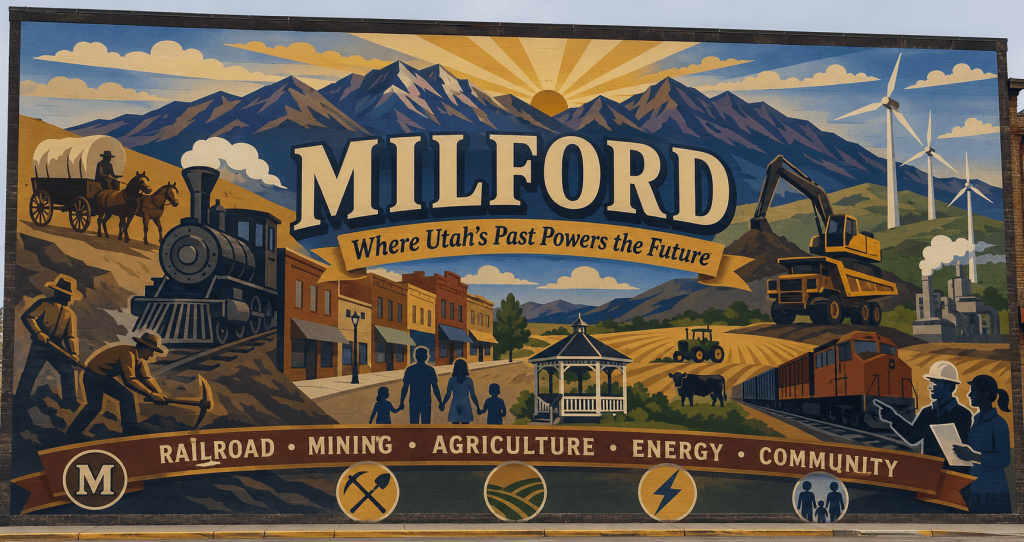
Writer’s note: This was the presentation created for the “Milford Grand Reunion” presented on September 6, 2026.
For nearly 80 years, generations of students have walked the halls of Milford High School.
• Some remember when television was new.
• Some remember when MTV actually played music.
• And others have never once answered a telephone attached to a wall.
That is a lot of history.
And in Milford, history is never just about dates. It is about people, families, businesses, school activities, old buildings, new buildings, and explaining who somebody is related to. You can’t just ask, “Do you know Steve?” You have to say, “Steve Johnson. Mark’s brother. Linda’s boy. His grandpa worked for the railroad. They lived over by the old pink apartments.” Then everybody says, “Ohhhhhh. THAT Steve.”
Milford has changed dramatically over the decades, but in some ways, it hasn’t changed at all. For example, Milford still has wind. A lot of wind. It just took us a long time to figure out how to send an invoice for it—but more on that in a minute.
Where It All Began
Milford was settled in 1873. A few years later, the Horn Silver Mine helped launch a major mining boom in western Beaver County, and in 1880 the railroad arrived. That changed everything.
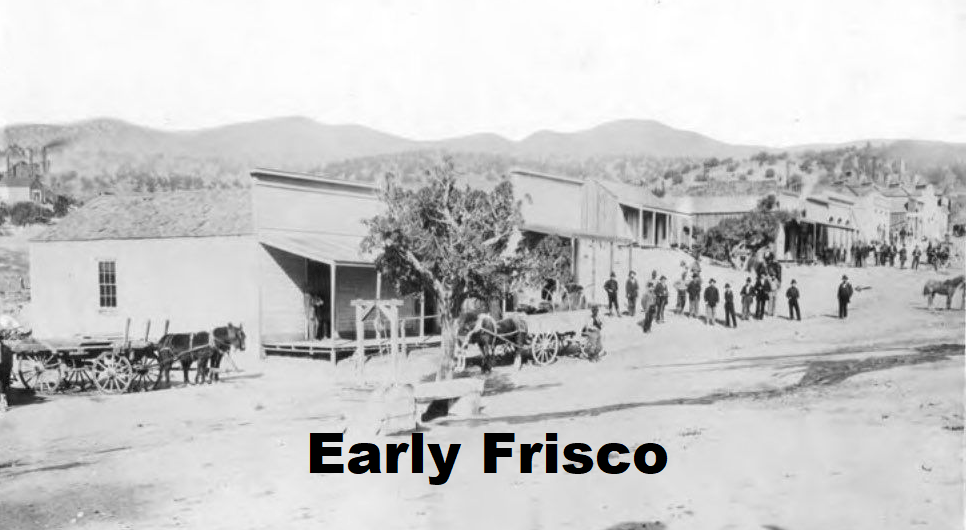
Milford became an important shipping and transportation center for western Utah. Mining came through Milford. Livestock came through Milford. People came through Milford. If you wanted to move something important in or out of this part of Utah, Milford was the place.
Think of it as the Amazon distribution center of 1885, except instead of two-day shipping, the delivery estimate was probably, “Should be there sometime next month.”
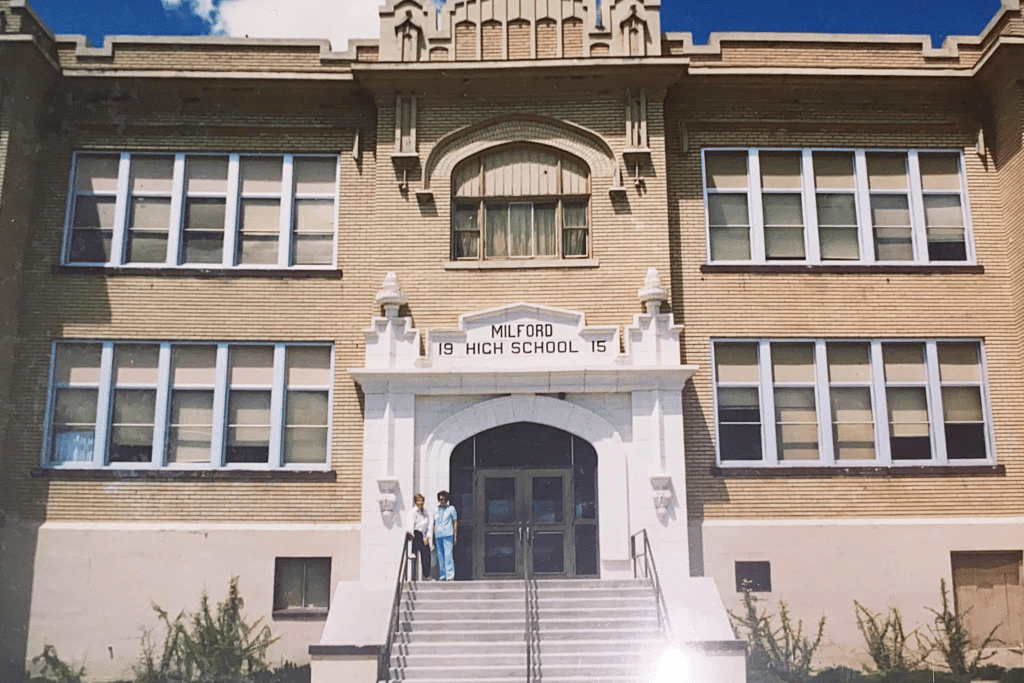
Milford officially became a city in 1903, and in 1915 the community got its first dedicated high-school building. By the time the class of 1943 graduated, Milford already had all the essential ingredients of a western Utah town: mining, railroads, farming, school sports, churches, a Main Street, and enough wind to relocate a trampoline from Beaver County to Idaho.
Imagine Milford in 1943. Franklin D Roosevelt was president, World War II was raging, the railroad was still a major part of the local economy, and downtown Milford was busy. People shopped locally because, for the most part, there was nowhere else to shop. Nobody said, “I’ll just order it online.” There was no online. There was barely line.
Phones were different. Cars were different. Schools were different. And if you had told a Milford graduate in 1943 what this valley would look like nearly 80 years later, they probably wouldn’t have believed you.
Imagine explaining that one day giant wind turbines would stretch across the valley, thousands of acres would be covered with solar panels, and engineers would drill miles underground into hot rock to make electricity.
A Milford old-timer probably would have said, “So we’re still digging holes and fighting the wind?”
Yes.
Sounds about right.
The 1950s brought plenty of change. Television began appearing in more homes, cars became increasingly important, the school grew, and local businesses became community institutions. In 1955, Milford got seven-digit telephone numbers. At the time, that was a major technological development.
Today, if a phone takes four seconds to load something, people start wondering whether Verizon is collapsing. Back then, people were excited to make a call without an operator getting personally involved. Of course, the operator probably already knew exactly why you were calling.
Small towns had caller ID decades before caller ID. It was called: everybody knows everybody.
That may have been one of the defining features of growing up in Milford. In a large city, teenagers occasionally get away with things. In Milford? Not really.
If you did something dumb at 3:15 in the afternoon, your mother could know about it by 3:22. Sometimes before you even got home. There was always somebody watching—a teacher, a neighbor, an aunt, a cousin, or somebody who went to church with your grandmother.
We didn’t have surveillance cameras. We had Donna at the grocery store.
Much more effective.
Over the decades, Milford also had a collection of businesses that became part of the town’s collective memory. One of the best examples was the Hong Kong Cafe. That is one of the funny things about hometown memories. You remember both of these things: your sophomore algebra teacher, and also you remember exactly what you ate after a basketball game in 1968, and it was probably sweet and sour pork and chicken chow mein.
The human brain apparently works like this: quadratic equations? Gone. French fries? Perfectly preserved.
The Railroad, the School, and a Changing Town
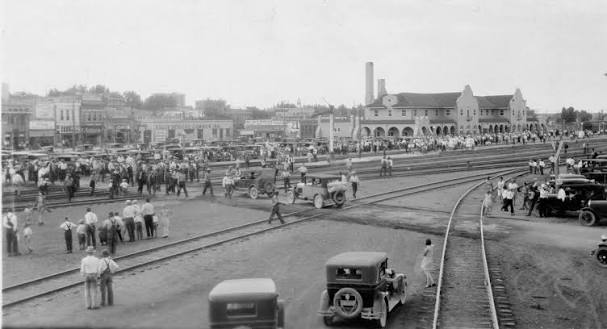
For generations, the railroad helped define Milford. It provided jobs, brought people into town, and connected Milford to the rest of the West. Entire families worked for the railroad.
At times, the town could almost be divided into three groups: people who worked for the railroad, people related to someone who worked for the railroad, and people waiting in their cars for 20 minutes to cross the tracks.
For a long time, that worked. But like almost everything else, the railroad changed. Operations modernized. Employment changed. Passenger travel changed. And Milford had to change with it.
By the 1970s and ’80s, much of the Milford many graduates remember was taking shape. In 1974, a
new high-school gymnasium was built, and that gym became one of the centers of community life. Basketball games, wrestling, assemblies, school dances, graduations, pep rallies, and approximately 11 million hours of teenagers pretending not to look at one another all happened there.
There are probably Milford couples today who first noticed each other in that gym. There are also probably parents who specifically warned their children about the person they met there.
Sometimes those were the same couple.
One of the biggest changes in school history came in the 1990s. In 1992, voters approved a bond for a new school, and by 1996 students were attending classes in the new Milford High School.
For graduates of the old school, returning years later could feel a little strange. That is one of the odd things about going back to your hometown after several decades. You still know exactly where everything is, except half of it isn’t there anymore.
You find yourself saying, “Turn left where the Corner Drug used to be.”
Perfectly clear directions—if you’re from Milford.
Today Milford High serves grades 7 through 12 and remains a small school. And small schools offer something large schools simply can’t provide: absolutely no anonymity.
You cannot quietly have a bad day. Everybody knows. You cannot quietly get in trouble. Everybody knows. You cannot quietly date somebody. Everybody REALLY knows.
By lunch, people have already discussed whether the relationship has long-term potential. Even the grandparents probably weighed in.
Milford Learns to Reinvent Itself
Plenty of western towns disappeared when their original industries faded. Mining declined. Railroads changed. Mills closed. People moved away. Towns died.
But we didn’t. Milford survived.
We adapted.
Agriculture remained important. Mining was an on-and-off part of the regional economy. Schools and government provided stability. And then another industry began to emerge: energy.
Which makes sense.
Milford has spent more than a century looking across the landscape and asking, “What can we get out of this?”
Ore? Yes.
Cattle? Yes.
Heat? Yes.
Sunlight? Duh.
Wind? Double duh.
If someone can figure out how to make electricity from tumbleweeds and jackstickers, then we’re really going to dominate.

In 1984, the Blundell geothermal power plant began operating near Milford. That means Milford has been producing geothermal electricity for more than 40 years. Today, renewable energy often gets discussed like somebody invented it last Thursday. Milford was producing geothermal electricity when people still wore parachute pants.
That’s how long we’ve been doing this.
Geothermal also has one enormous advantage: it can generate electricity around the clock. Solar power depends on sunshine. Wind depends on wind. Geothermal keeps going.
Although, to be fair, lack of wind has rarely been Milford’s biggest problem.
Then came the wind projects. Major wind-energy developments arrived near Milford around 2009 and 2011, and suddenly giant turbines appeared across the landscape.
The reaction was probably something like this: First, “Those are huge.” Then, “There are a lot of them.” And finally, “Well, at least now the wind is finally paying property tax.”
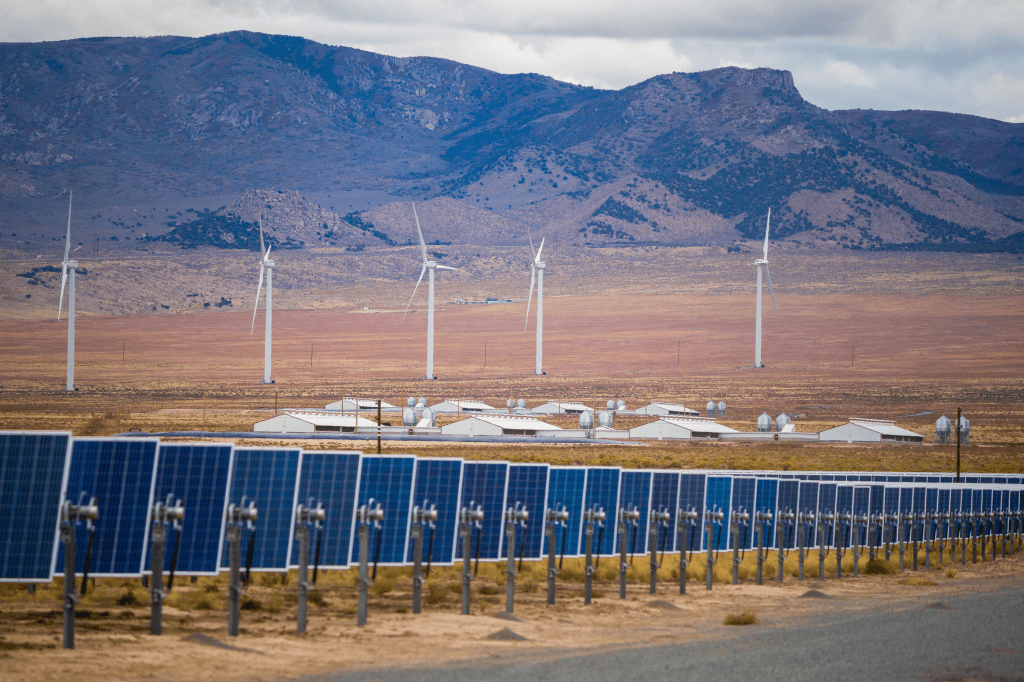
For generations, the wind blew tumbleweeds into our yards for free. Now it is part of the economy.
That’s progress.
Utility-scale solar followed. Large solar projects began appearing across western Beaver County, and once again Milford had the right resource: sun. Lots of it.
Western Utah has never struggled much with a shortage of sunshine.
Shade? That’s another matter.
If you find a mature shade tree in western Beaver County, it should probably be listed on the National Register of Historic Places.
From Small Town to Energy Center
Today, the Milford area sits near a remarkable combination of energy resources: geothermal, wind, solar, transmission lines, research facilities, and now next-generation geothermal.
That combination matters because America does not simply need more electricity. It needs reliable electricity. And Milford happens to sit in one of the few areas where several different energy technologies can work together.
That means this little town—one that many Utahns still struggle to locate on a map—may become increasingly important to the state’s energy future.
People in Salt Lake City have said this to me, “Oh yeah, Milford. I stop there for gas on the way to St. George.” I have to remine them, “You’re thinking of Fillmore. It’s not the same thing.”
Soon they may be asking, “How much power can Milford send us?”
Progress.
The University of Utah’s FORGE project is located near Milford and serves as a major research site for advanced geothermal technology. Scientists and engineers come from across the country to work here.
And there is something deeply entertaining about that.
Some of the smartest engineers in America now fly to Utah, drive several hours, arrive outside Milford, and spend millions of dollars figuring out how to make hot rocks useful.
Meanwhile, old Milford miners are probably thinking, “We’ve known the rocks were hot for a hundred years.”
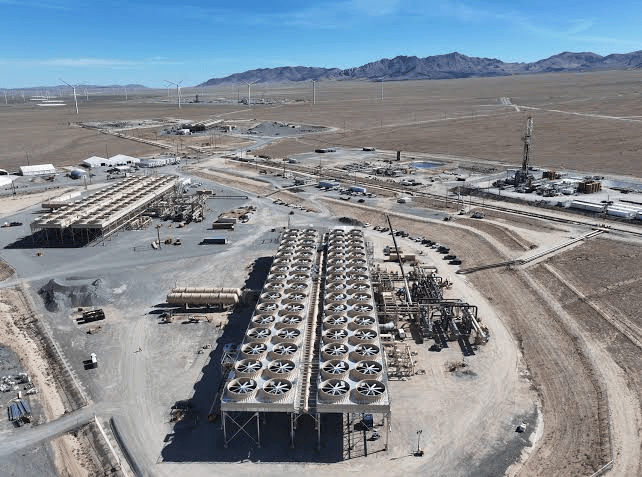
One of the biggest new developments is Fervo Energy’s Cape Station project. Instead of relying only on naturally occurring geothermal reservoirs, enhanced geothermal uses modern drilling techniques to access extremely hot underground rock.
They drill deep. Then they drill sideways. Then they circulate water through the hot rock and bring the heat back to the surface.
That is the simplified version.
The engineering version probably contains several thousand words and at least one diagram nobody understands.

Cape Station is expected to begin with around 100 megawatts of generation. Plans call for approximately 400 megawatts by 2028, and the broader development could reach roughly 2 gigawatts. Eventually perhaps much more
That is a lot of electricity.
Enough that Milford may eventually produce far more energy than it has residents. By a considerable margin.
We may become the only town where every resident could theoretically have their own megawatt.
Please do not attempt that at home.
The importance of these projects also goes beyond local jobs. If enhanced geothermal proves economical at scale here, similar technology could potentially be used across much of the western United States.
Technology being developed and proven in Beaver County could eventually help power cities throughout the West.
For much of its history, Milford exported physical products: ore, livestock, agricultural products.
Now we’re increasingly exporting electrons. And they’re easier to ship. No trucks. No railroad cars. No cattle getting loose on Main Street.
Just wires.
What Comes Next
Energy development is also attracting interest from other industries. The Mineral Mountains Project Area as part of the Utah Inland Port Authority was created to encourage industrial growth around Milford, Beaver and Minersville. Potential industries include manufacturing, renewable-energy businesses, logistics and other large industrial users.
Because western Beaver County has access to substantial electrical infrastructure, the tech industry is starting to show interest in the area. We may soon see the appearance of high tech. Bill Gates has made a couple of recent visits to town. Fervo just announced a big power deal with Google. All in little ol’ Milford.
Life comes at you fast.
Of course, growth is not automatically good, and it is not automatically bad. Growth can create jobs, broaden the tax base, help keep younger families in the area, grow and sustain our schools, and support local businesses and services. But it can also create pressure on housing, roads, water, traffic, public services, noise, and land use.
The question is not whether Milford should change. Milford has always changed.
And we’re changing again. Right now.
Want proof? Go look at the work-truck traffic on main street on a weekday at 6:30 AM. Look at the crowds of hi-vis yellow vests in line at On The Run each morning.
Want the truest barometer for the level of industrial activity around town? How many breakfast burritos they serve every day.
The real question is: How do we benefit from growth without turning Milford into someplace none of us recognize?
Because there are some things we probably don’t need.
We don’t need six lanes of traffic.
We don’t need three Starbucks.
Although one Starbucks might cause a minor civil war. Yet even I could go for a pumpkin spice latte.
And if Milford ever gets valet parking, something has gone terribly wrong.
But getting our Subway back would be nice.
Fortunately, some things are probably safe. People in Milford will continue giving directions based on buildings that disappeared 30 years ago. You will still hear, “It’s over by where the old Sinclair used to be.”
Everybody will still know whose truck is parked where.
A trip to Cedar will somehow continue taking most of the day.
Someone will complain about the wind.
Everyone will still notice when the wind isn’t blowing.
And Milford High sports will continue to produce an astonishing number of passionate fans relative to the actual size of the town.
Still Home
That may be the best thing about a reunion. We come back and see everything that changed: new buildings, missing buildings, new roads, new industries, different businesses, different teachers, different students.
And then, after about 20 minutes, something strange happens.
The years start disappearing.
People who haven’t seen each other since 1968 start talking like they were together last Tuesday. Former athletes remember every play. Former classmates remember every teacher. And everybody becomes approximately 17 years old again.
Until somebody tries to stand up.
Then reality returns immediately.
When you look at Milford’s entire history, a pattern emerges. Mining changed Milford. The railroad changed Milford. Agriculture changed Milford. Energy changed Milford. And now advanced energy and industrial development may change it again.
But Milford’s basic personality has proven remarkably durable.
People work. People adapt. People argue. People solve problems.
Sometimes in that order.
And somehow the town keeps moving forward.
Milford has never been a place where everything came easily. We live in a desert. We have wind, distance, drought, winters, and Highway 21.
But we have great people, and a great life. We’ve built a town here and kept it alive for more than 150 years.
That deserves some credit.
For those who haven’t been home in a long time, here’s the update: Milford is still here. The school is still here. The mountains are still here.
The wind is DEFINITELY still here.
But there is a lot happening.
Milford is becoming increasingly important in renewable energy. New technology is being developed here. Major industrial projects are underway. And the next 20 years may bring as much change as almost any period in Milford’s history.
Main Street Program
Another important part of Milford’s next chapter is the effort to bring new life back to Main Street.
Recently, Milford has been approved for the federal/state Main Street America program. This program is designed to assist historic and rural small communities revive and restore their main streets.
Like many small towns, Milford’s downtown has seen too many buildings sit vacant, underused, or in need of serious rehabilitation.
We all remember the Corner Drug, Altman’s, Poole’s, The White Market, Jefferson’s, SMR Lumber, The Hong Kong, Sinclair, Hughes, Sam’s Furniture, and the movie theater.
The Main Street Program is intended to help change that by creating incentives for property owners and businesses to restore older buildings, improve storefronts, attract new tenants, and put long-empty spaces back into productive use. The goal is not to erase Milford’s history, but to make that history useful again and bring our main street back to it’s former glory.
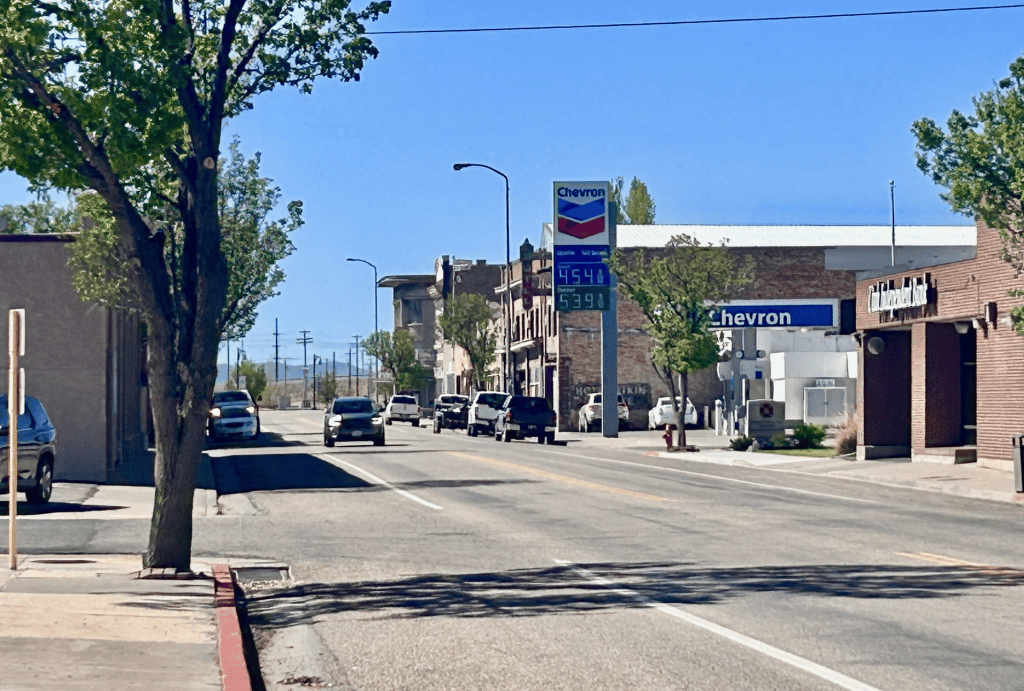
If it works, the result could be more than a few remodeled buildings. A revived Main Street could once again become a place where people shop, eat, gather, and spend time—a real center of town rather than simply a street people drive through. With new industrial and energy investment bringing more workers, families, and economic activity to the area, Milford has an opportunity to pair that growth with preservation. In other words, while the valley around us may be filling with some of the newest energy technology in the country, there is also a chance to make our old downtown look like Milford again—only with fewer boarded-up windows and, ideally, considerably better plumbing.
Years from now, someone may stand up at another reunion and explain everything that happened next.
And half the room will say, “I remember when none of that was there.”
Because that is what people from Milford do.
We measure history by what used to be there.
Milford has changed.
We’ve changed.
Our knees have definitely changed.
But somehow, it still feels like home.

